Easy Reversible One-Row Repeat Stitch Pattern That Lays Flat + Video
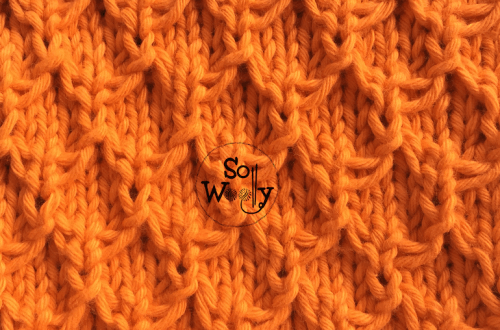
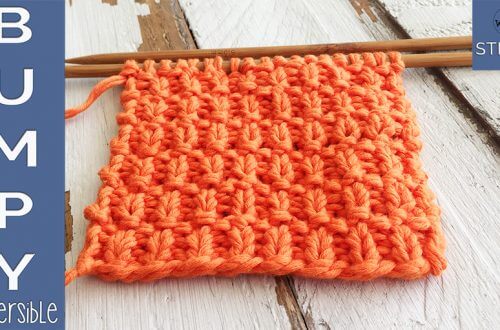
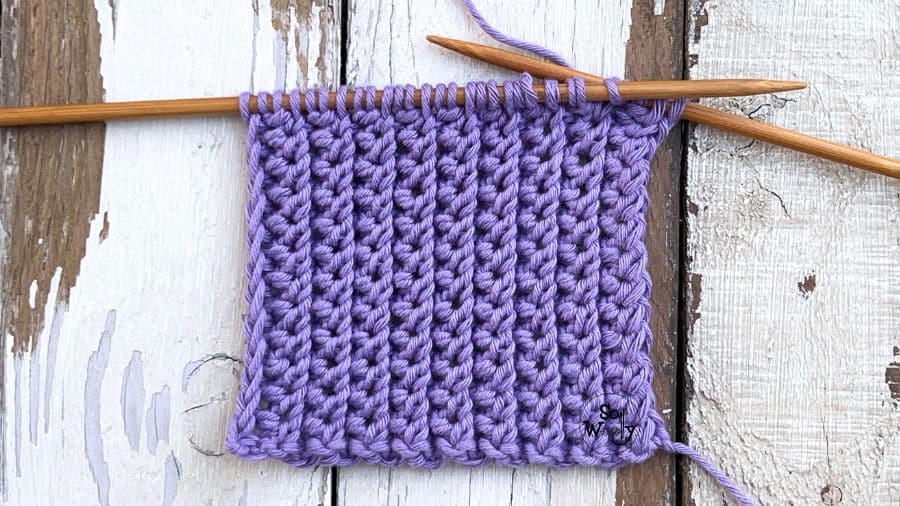
If you’re looking for an easy reversible one-row stitch pattern that looks the same on both sides, doesn’t curl, and has a beautiful textured finish, this knitting stitch is a perfect choice.
✨ Prefer a printable version without ads or scrolling?
👉 You can download the full guide here →
It uses just 3 simple steps to create a stunning fabric that works beautifully for scarves, blankets, baby knits, and other projects where you want something quick to memorise without complications.
That makes it a great option when you want a stitch pattern that looks good without demanding constant attention. In other words, it’s a helpful little stitch, not a drama queen 😉.
Materials
For this swatch I used:
US 7 (4.5 mm) bamboo needles (they’re long, smooth, and pointy, perfect for all sort of patterns) #ad
And 100% Cotton Yarn (worsted weight, smooth and structured, ideal for stitch definition) #ad
“As an Amazon Associate, I earn from qualifying purchases.”
Abbreviations
CO: cast on
st (s) = stitch (es)
RS: right side of the work
wyif: with yarn in front
sl1pw: slip one stitch purlwise (pass one stitch onto the right-hand needle as if to purl)
wyib: with yarn in back
k2togtbl: knit two stitches together through the back loop
P: purl
WS: wrong side
BO: Bind off
How to Knit This Easy Reversible One-Row Knitting Pattern (3 Steps Only)!
Stitch Multiple
CO multiples of 3 + 2. For example: 6 * 3 = 18 + 2 = 20 sts (no edge sts included).
One-Row Repeat Reversible Stitch Knitting Pattern Instructions
Row 1 (RS): wyif sl1pw, *wyib insert the needle between the first and the second st, K1, don’t take it off of the left-hand needle, k2togtbl, P1*. Repeat from * to *, to last st, K1.
Repeat row 1 until the desired length is reached.
How to Bind Off
wyif sl1pw K1, psso, *K1, psso, P1, psso, P1, psso*. Repeat from * to * to last st, K1, psso.
Best Knitting Projects For This Stitch
Because this stitch is reversible and flat, it’s especially useful when both sides will be visible.
Great options include:
- Scarves.
- Blankets.
- Baby items.
- Washcloths.
- Wraps.
- Decorative panels for sweaters and cardigans.
Tips For Knitting This Stitch Pattern
A few small things will help the texture show up more clearly:
- Use a yarn with a good stitch definition.
- Try a light or semi-solid colour if you want the texture to stand out more.
- Keep your tension even.
Rule of Thumb: Knit a small swatch before starting a larger project.
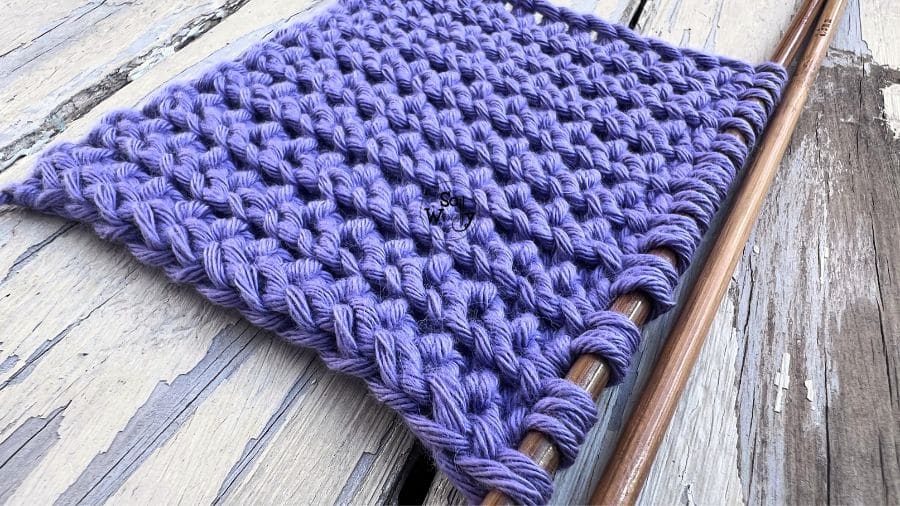
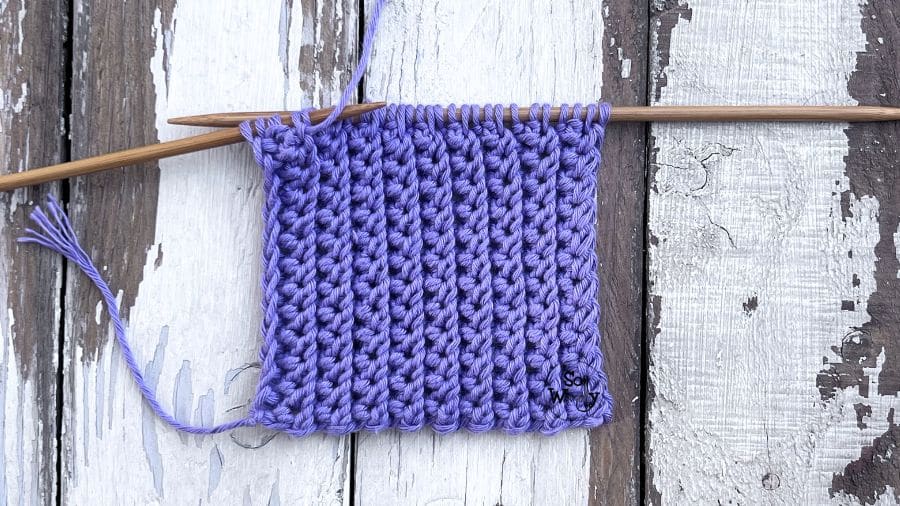
This is the other side of the work:
Free Scarf Planning Guide
If you’d like to turn this stitch into a scarf, my free 3-Step Perfect Scarf Formula is a great place to start.
It includes how to choose your yarn, how to pick the stitch pattern, how much yarn you’ll need, needle sizes, and cast-on numbers for 2 different yarn weights.
👉 You can download the free full guide here →
Frequently Asked Questions
What makes this stitch pattern a one-row repeat?
This stitch pattern uses only one repeating row. You simply knit Row 1, then repeat Row 1 until the project is finished, so there is no need to remember a multi-row sequence.
Is this stitch pattern reversible?
Yes. The stitch looks the same on both sides, which makes it a perfect reversible stitch pattern for scarves, blankets, baby items, and any project where both sides will be visible.
Does this stitch curl at the edges?
No. This stitch pattern lays flat and doesn’t curl, which is a big advantage over many textured stitches that tend to bend at the edges.
Is this stitch pattern beginner-friendly?
I’d say it’s great for advanced-beginners. It uses just 3 simple steps and one repeating row, so once you practice how to knit two stitches together through the back loop, you’re ready to knit a beautiful scarf!
What yarn works best for this stitch pattern?
A yarn with a good stitch definition works best, especially if you want the texture to stand out. For example: Merino wool yarn, cotton, bamboo, linen (or its blends) are always good choice. Light or semi-solid colours will show the texture more clearly than dark or very fuzzy yarns.
How many stitches do I need to cast on for this stitch?
Cast on a multiple of 3 + 2 (no edge stitches included). For example, to make a small sample, you could cast on 11 stitches (3 × 3 + 2 = 11).
Where can I find help planning a scarf with this stitch?
If you’d like to turn this stitch into a scarf, my free 3-Step Perfect Scarf Formula walks you through yarn selection, stitch choice, needle sizes, and cast-on numbers for two different yarn weights.
Do you have a printable version of this Easy Reversible One-Row Knitting Pattern?
Yes. If you prefer a clean, printable version without ads or scrolling, you can download the PDF file here. That PDF is perfect for keeping in your project bag or printing for easy reference.
Before you Leave: Join the So Woolly Community!
If you enjoyed this tutorial, join me for personal notes, thoughtful lessons, and calm knitting guidance — delivered straight to your inbox.
No overwhelm. No pressure. Just clarity and steady progress.
A big hug, and happy knitting,
Carolina – So Woolly
PS: You can explore more designs like this in the Textured Stitch Patterns collection.